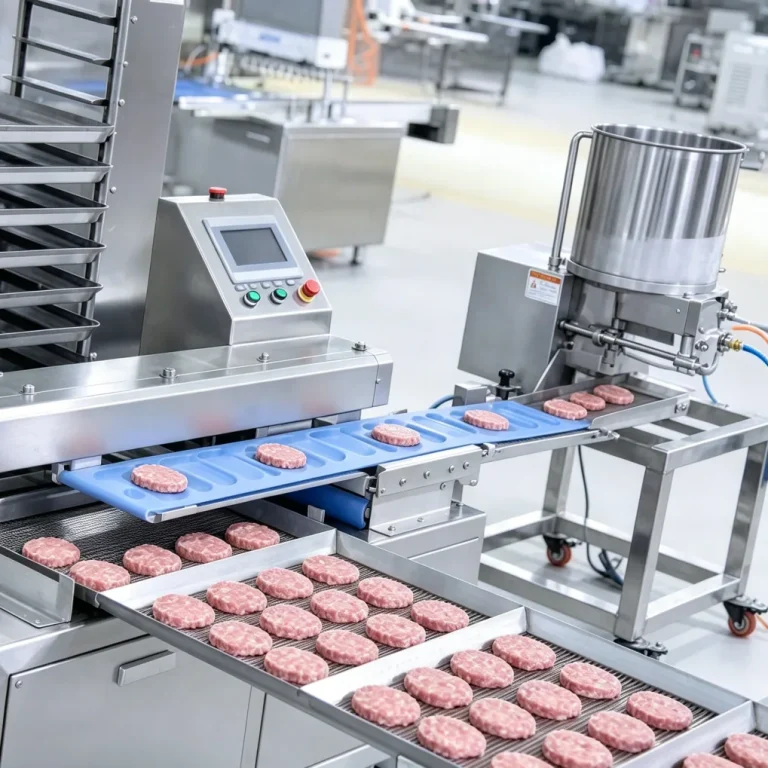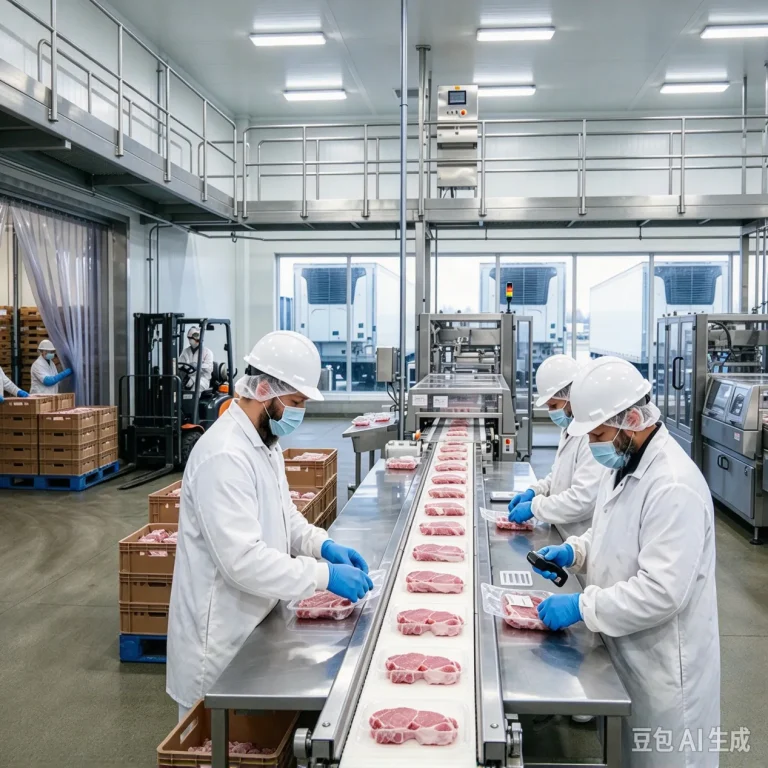
Choose a batter and breading line around the coating you need on the finished product. A thin crumb on a fish fillet, a thick batter on a tempura item and a coarse coating on a nugget each require different handling. Start with the product and recipe, then check how the equipment transfers the coated pieces to the next stage.
Lay out the coating steps
A breaded product may go through predusting, battering, then breading before a fryer or another downstream step. Each stage serves a separate purpose. Choose the steps your recipe needs and use a sample run to check how the coating behaves at each transfer.
- Predusting. A thin flour layer can give batter a surface to hold to. The SFJ-200 food preduster is intended for items such as nuggets and fish fillets. Compare the GFJ-600-I drum preduster for irregular pieces that can tumble without losing their shape.
- Batter application. Check the viscosity of the batter and whether the product needs complete immersion. The SJJ-200 batter dipping machine uses mesh belts to submerge the product in thicker batter and includes an air knife for removing excess batter. Confirm the dwell time and how much batter remains after the outfeed.
- Breading. A dry crumb conveyor needs to distribute crumb on the underside and top of the product. Compare the SXJ-200 breading machine for this arrangement. For moist fresh crumbs, the XXJ-600 fresh crumb breading machine includes equipment for stirring and recirculating crumbs that tend to clump.
Match the belt and transfer points
Check the usable belt width with your largest portion, the planned number of lanes and the spacing needed between pieces. The HIBEST catalog lists 200 mm belts for the SFJ-200 and SXJ-200, while the XXJ-600 lists 600 mm. Measure the actual space the product needs on the belt before choosing a machine based on nominal width.
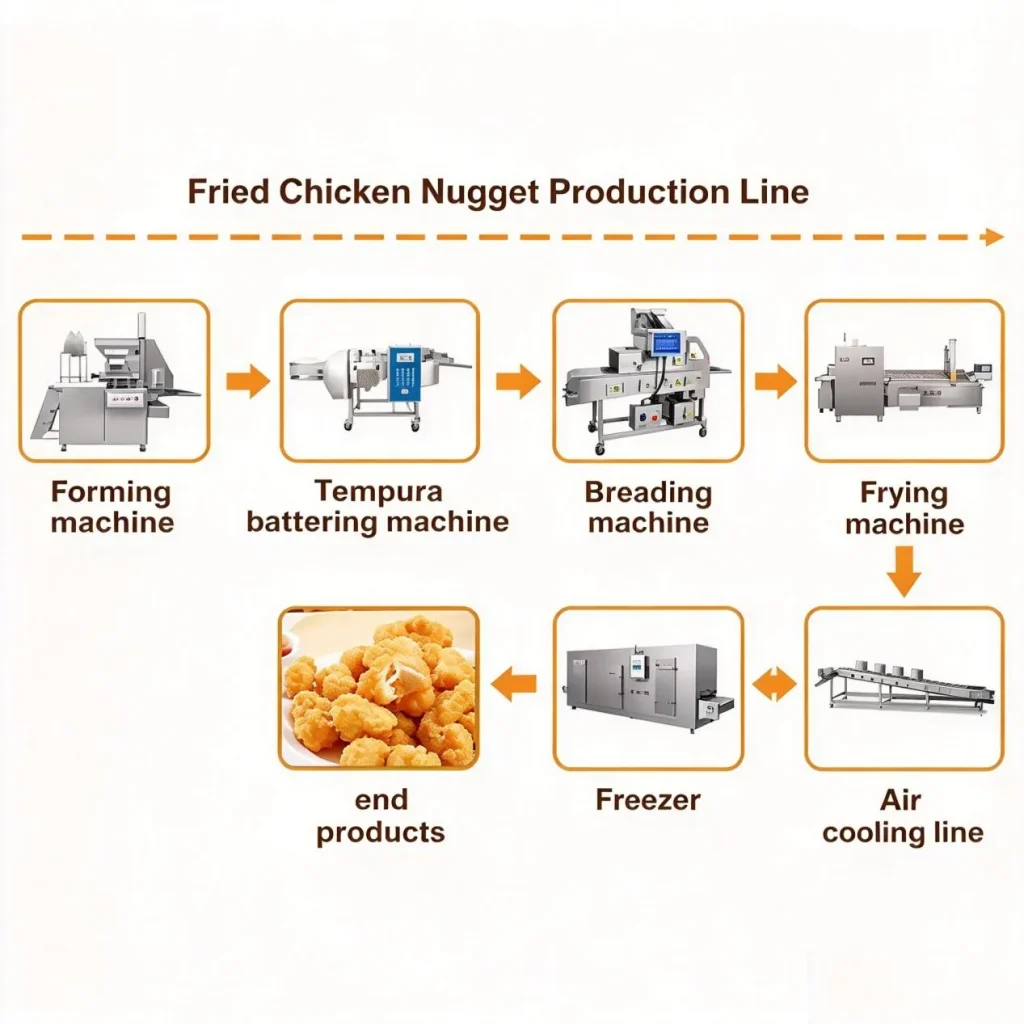
Compare the height, speed and direction of neighboring conveyors. If the batter belt releases product faster than the breader accepts it, pieces can overlap or transfer unevenly. Include the forming machine or slicer upstream and the fryer, oven or freezer downstream in the same plan. The popcorn chicken processing line shows an example of coating followed by pre-frying, cooling and freezing.
Measure coating pickup on your own product
Weigh a sample before coating and again at the line outfeed using a consistent method. If a 1.00 kg bare sample weighs 1.18 kg after coating, its coating pickup is 18% of the starting weight. Agree on the target based on the recipe and compare samples after the line reaches steady operation.
Look at coverage where the product contacts the belt and around edges or creases. Inspect the product after frying or the next processing step, since a coating that looks even on the breader can behave differently at transfer or during cooking. Record the recipe, belt speed, usable throughput and any rejected pieces so you can repeat the comparison on another setup.
Plan around the downstream bottleneck
If the coating line feeds a fryer, confirm the fryer’s belt, usable width and rate for the coated product. Compare the continuous electric fryer configurations when planning connections to the frying stage. A recipe change that affects batter pickup or cooking time can change the line’s usable rate, even if the coating units can run faster.
Ask about draining or changing batter, recovering unused crumb and accessing the belts for cleaning. A line that serves several recipes should have a practical way to change the coating and reset the equipment between runs.
What to include when requesting a configuration
Share the product dimensions and portion weight, batter viscosity or sample, crumb size and type, desired coating pickup, and the target output in kg/h. Add the height, belt width and operating rate of any equipment the new machines will connect to. Bring photos of the coated and finished product if available. Discuss your product with HIBEST or browse the existing production line layouts before choosing the final sequence.