The right patty former depends on the portion you want to produce and how it will travel through the rest of the line. A compact former can suit a small burger program, while a wider plate system may be a better fit for several shapes or a faster conveyor. Compare machines with your recipe, your target portion and your downstream equipment in mind.
Define the patty before choosing a mold
Measure the desired shape, width and thickness before cooking. A diameter works for round patties, while an oval or shaped portion needs a drawing or a sample. Add the target portion weight and the variation your process can accept. Include any smaller or larger formats you plan to introduce, since changing a mold affects setup and changeover time.
Give the supplier details of the blend and its temperature when it reaches the former. A mold trial should use the meat, poultry, fish or vegetable mix you intend to run. Check cavity fill, edge definition and whether the portion releases cleanly onto the belt. A shape that leaves the mold cleanly also needs to survive the transfer to coating, freezing or packaging.
Compare compact and plate-type machines
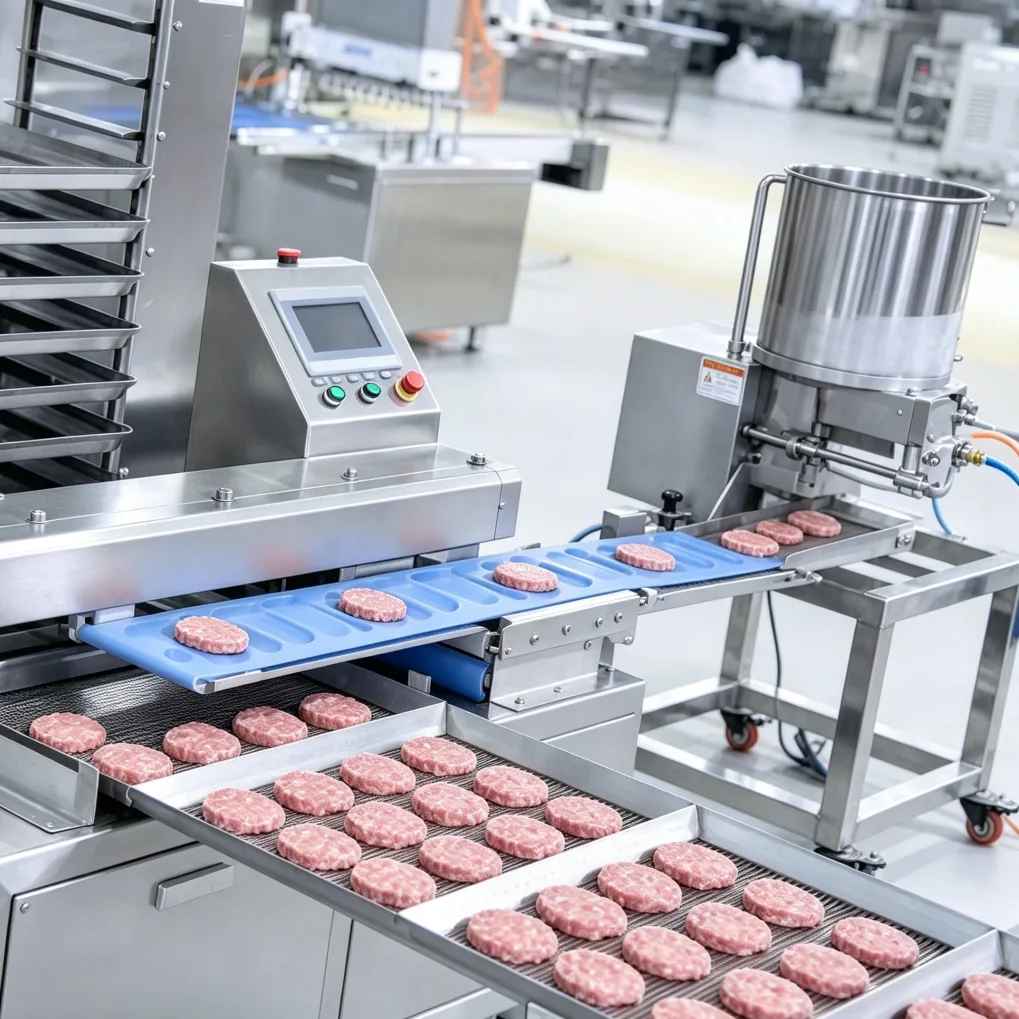
The automatic mini burger patty forming machine lists the CXJ-200 at 50–100 kg/h and 8–18 mm thickness, and the CXJ-300 at 100–300 kg/h and 6–19 mm thickness. These figures help narrow a shortlist for a smaller line. Verify the mold range and expected rate for your intended patty.
For a larger line or several mold formats, review the automatic plate-type food forming machine range. The catalog lists about 200–400 kg/h for the CXJ300-II, about 300–600 kg/h for the CXJ400-IV and about 500–1,000 kg/h for the CXJ600-IV. Take these as manufacturer listings and ask for output with your blend, portion size and plate configuration. A heavier patty may lead to a different number of pieces per minute even if the output in kilograms is similar.
Calculate the rate your line needs
Convert the desired pieces per minute to kilograms per hour using the target weight. A line making sixty 100 g patties per minute would form 360 kg/h. That simple calculation gives you a starting point for comparison with published capacity. Separately account for changes in recipe or mold, time spent cleaning, and portions rejected for shape or weight.
During the trial, collect consecutive portions after the former is running steadily. Weigh them individually and look at both the average and the spread. Observe how the same portions pass to the next belt. If packing or freezing has a lower operating rate than the former, plan for that rate when sizing the line.
Check what happens after forming
Ask how the discharge aligns with the next conveyor and whether the patties arrive with the spacing and orientation the next operation needs. A bare patty that moves directly to freezing has a different line layout from a portion that will be battered and breaded. For products that need separation during handling or packing, discuss paper placement with the supplier early and confirm where it fits.
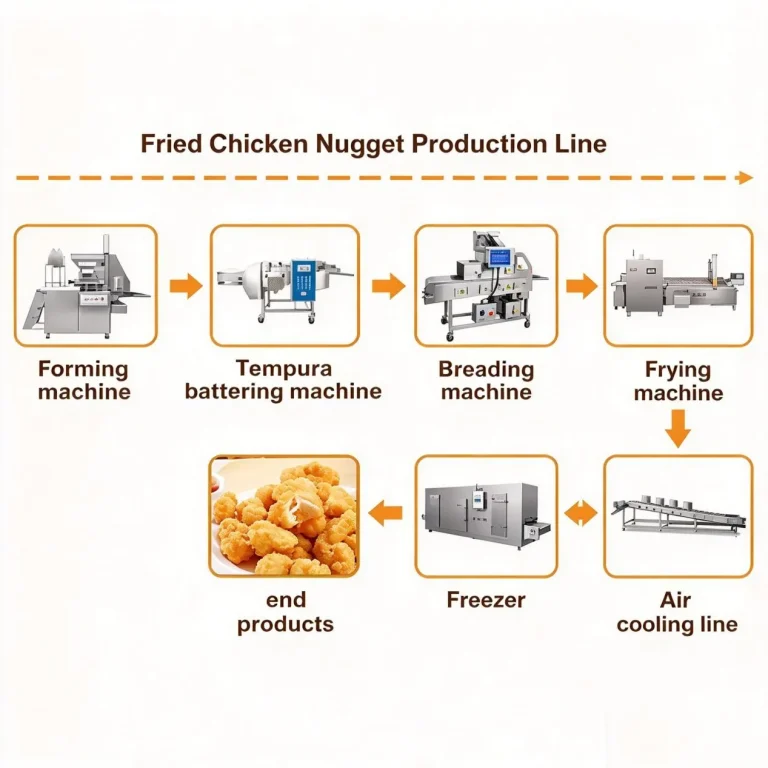
Look at the available floor space on both the infeed and outfeed sides. Allow room for loading, mold changes, cleaning and transfer adjustments. The hamburger patty production line shows how preparation, forming, coating and freezing can be combined based on the product.
What to bring to the machine trial
- A portion sample or drawing with the target shape, thickness and weight.
- The recipe or a representative blend, including its infeed temperature.
- The target pieces per minute and saleable kilograms per hour for each format.
- The dimensions and planned rates of the coating, freezing or packing equipment.
- A list of mold changes needed during a normal shift.
Use these details when discussing the hamburger patty production plant application. Ask HIBEST to review your patty formats and target output so the proposed mold and conveyor fit your product.